
Comparisons
Barcode vs scale bar inventory systems: an honest comparison
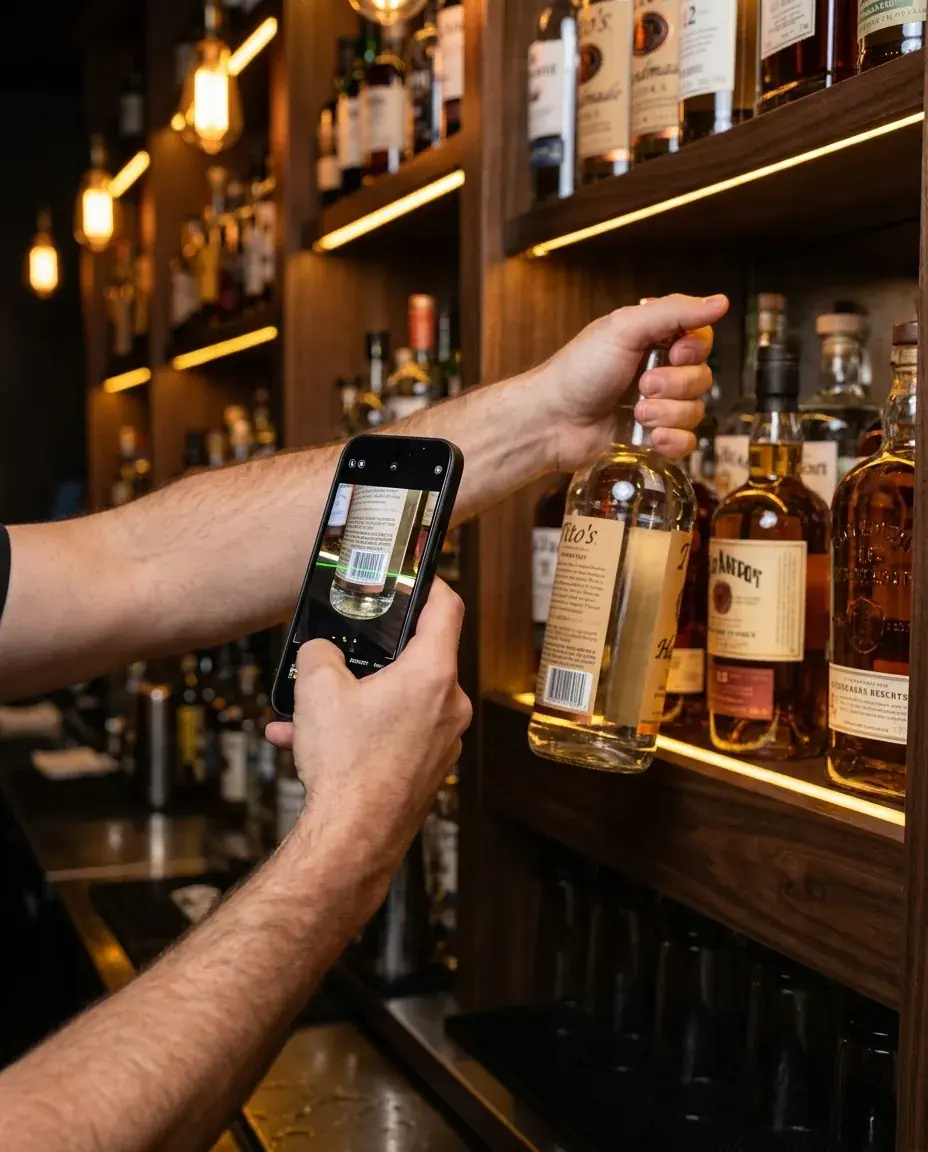
Barcode systems trade some precision for speed and simpler hardware. Scales trade speed and logistics for tighter partial-bottle accuracy. Here is how to choose.
Barcode versus scale is one of the first decisions operators face when leaving spreadsheets. Both approaches can support serious inventory control. They optimize for different constraints: speed and operational simplicity on one side, partial-bottle precision on the other. An honest comparison beats a tribal war.
Barcode-driven counting typically works by scanning a product identifier, recording sealed quantities, and capturing an estimated fill level for open bottles, often as a fraction, tenths, or visual mark. The hardware footprint can be a camera-equipped phone or a dedicated scanner plus a web workflow. Training centers on route discipline and consistent fill estimation.
Scale-based counting typically works by placing bottles on a scale (and sometimes correlating weight to remaining volume using bottle profiles). The promise is less visual guesswork on openers. The cost is hardware on the floor, calibration habits, bottle database quality, and the minutes spent placing each bottle on a scale during a full-room count.
Speed usually favors barcode-plus-fill-level workflows for full back bars with many SKUs, especially when sealed cases and speed rails dominate the minutes. Scales can be competitive in smaller, high-value sets where every opener matters and staff are practiced. Your stopwatch on a real count beats any vendor stopwatch on a sample shelf.
Precision usually favors well-implemented scale methods for open bottles, assuming correct empty/full weights and consistent technique. Visual fill levels are estimates; trained teams can be consistent enough for management decisions, but they will not match a good scale gram-for-gram. The question is whether the extra precision changes decisions enough to pay for the extra friction.
Measurement error exists in both systems. Barcode systems absorb human fill-level bias. Scale systems absorb wrong bottle profiles, wet bottles, pour spouts left on, sticky bases, and skipped calibration. Neither method removes the need for receiving accuracy and recipe integrity. Inventory identity math still governs variance.
Hardware and failure modes differ. Scales introduce device charging, placement, breakage, and 'the scale is in the other building' problems. Barcode workflows introduce scanning glare, missing barcodes, and catalog mismatches when a supplier changes labels. Plan for the failure mode you can actually staff around at 10 a.m. before doors.
Training and culture matter. Scales can feel more 'objective,' which helps buy-in, until a bad bottle profile creates nonsense numbers and trust collapses. Barcode fill levels require coaching so one shift does not always round up. In both cases, publish the method and audit a sample of counts.
Hybrid approaches are legitimate. Some programs weigh only top-shelf openers or high-theft SKUs while barcode-counting the rest. Some use scales in a storage room and faster methods on a busy service bar. Hybrid only works if scopes and methods are labeled so you do not mix incomparable datasets in a variance report.
POS reconciliation does not prefer a religion. Projected vs actual works with either physical method if units are consistent and counts finish. If you are buying for variance control, evaluate the whole loop, count, recipes, sales, exceptions, not only the sensor. ExactPour's bar inventory software guide at bar inventory software situates method choice inside that loop.
When barcode-led systems are a strong fit: many SKUs, frequent full counts, limited appetite for specialized hardware, multi-location standardization, and teams that already think in scan-and-confirm workflows. ExactPour is built in this lane: barcode-driven counting with fill levels for partials, tied to POS variance and pour cost.
When scale-led systems are a strong fit: smaller premium inventories, extreme sensitivity to opener accuracy, willingness to maintain bottle weight profiles, and a physical layout where a scale station does not create a traffic jam. If that is your world, take scale vendors seriously, and still demand a labor time study.
Cost comparison should include devices, replacements, training time, and count minutes, not only subscription. A lower monthly fee with a twenty-minute longer count can lose on annual labor. An expensive scale kit that sits unused after month two loses harder.
Trial design for a fair fight: same location, same route, same cutoff rules, two full cycles per method if you can, with the people who actually count. Compare minutes, completion rate, opener disputes, and whether managers trust the variance output enough to coach from it.
Avoid false binaries in sales calls. 'Scales are always more accurate' ignores process error. 'Barcodes are always faster' ignores a chaotic catalog. Ask each vendor to show partial bottles, transfers, and a messy invoice, the parts that break tidy demos.
Choose the method your team will execute every scheduled cycle. Consistency compounds; perfection that gets skipped does not. If you want the barcode-oriented path with variance and pour-cost context, start from bar inventory software and test ExactPour on your shelf. If scales fit your constraints better, use the same ROI and cadence frameworks, just swap the sensor.
Ergonomics and injury risk rarely appear on vendor slides, but they appear on long count days. Repeated lifting onto a scale station can fatigue staff and slow the back half of a large inventory. Scanning along a shelf path can be easier on bodies while harder on eyes in dark storage. Ask the people with the sore backs which method they will still respect in February.
Bottle variety complicates scales more than marketing admits. Decanters, ceramic bottles, heavy glass, and unusual shapes need profiles. Spouts, pourers, and neck tags change weight. If your program rotates craft SKUs weekly, profile maintenance becomes a hidden labor line. Barcode fill levels handle novelty with less setup, at the cost of precision.
Compliance or insurance conversations sometimes push teams toward scale methods because it feels more auditable. Auditable still means documented method, trained staff, and retained records, not merely a scale brand name. A barcode system with timestamps, user IDs, and locked sessions can be more auditable than an undocumented scale ritual. Ask auditors what evidence they actually need.
Network and offline behavior matter in basements and walk-ins. If counting requires constant connectivity, know the dead zones. If scales need a companion device, know the battery plan. The best sensor is the one that still works when Wi-Fi dies during a pre-shift count. Test that scenario on purpose during evaluation.
Decision rule of thumb: optimize for completion and consistency first, precision second, hardware elegance last. Revisit the choice if unexplained variance on high-value openers stays loud after process is clean, that is when adding scale methods for a subset may pay. Until then, many bars are better served by a fast barcode loop tied to POS variance, as framed in bar inventory software.
Consider guest-facing optics only if counts ever happen near open dining areas. A scale station in a tasting room may feel clinical; a quiet scan route may feel invisible. Most counts happen before doors, but brunch programs and hotel lobbies sometimes blur that line. Choose a method that does not turn inventory into a show.
Vendor lock-in differs by method. Proprietary bottle-weight databases can be valuable and also sticky. Open barcode catalogs tied to your own product IDs are often easier to carry across tools. Ask what you own versus what you rent. That question belongs next to price on the comparison sheet.
If you already own scales for kitchen production, do not assume they automatically win for liquor. Different workflows, different cleanliness constraints, and different peak times may still argue for a barcode liquor loop. Shared hardware only helps when the operating rhythm truly overlaps. Keep the category lens from bar inventory software when you make that call.
Write your choice down as a method policy: primary method, exceptions that use scales, who maintains profiles or fill conventions, and how often you re-time a full count. Method drift, half the staff scanning, half using scales without shared rules, recreates the spreadsheet chaos you left. ExactPour supports the barcode-led path; whatever you choose, document it so next quarter's variance debate is about product, not about conflicting techniques.
Re-time the full count after any major layout change, menu overhaul, or staffing model shift. Methods that were fast in a tight well can slow down when you add a satellite bar. The barcode-versus-scale decision is not permanent dogma; it is a living tradeoff you should revisit with a stopwatch and a variance report, guided by the same category questions at bar inventory software.
Ask each vendor to cost a three-year hardware and labor scenario, not a one-month honeymoon. Include replacements, calibration time, profile maintenance, and the minutes of a full count after the novelty wears off. The method that wins on year-three total cost and completion rate is usually the right operational choice, even if another method looks more precise in a quiet demo room. Keep bar inventory software open so method choice stays connected to variance and pour-cost jobs, not gadget preference.
If your team is split emotionally, half wants scales because they feel scientific, half wants barcodes because they finish faster, run a structured A/B on the same SKU set for two cycles and publish the minutes, dispute rate, and manager trust score. Data ends religious wars faster than opinions. ExactPour will happily be judged on the barcode side of that test; a scale vendor should welcome the same daylight.
Put it into practice
See this on your bar
Run ExactPour for two weeks and turn this guide into real numbers in your own operation. Book a walkthrough if you want a live tour first.
Related
Comparisons
Toast inventory vs ExactPour: complementary tools, different jobs
Compare
ExactPour vs Partender
ExactPour
Bar inventory software
Guides
How to count liquor inventory: a practical bar and retail workflow
Guides
How to calculate pour cost from current inventory data
Variance
Bar variance explained: the gap that's draining your margin