
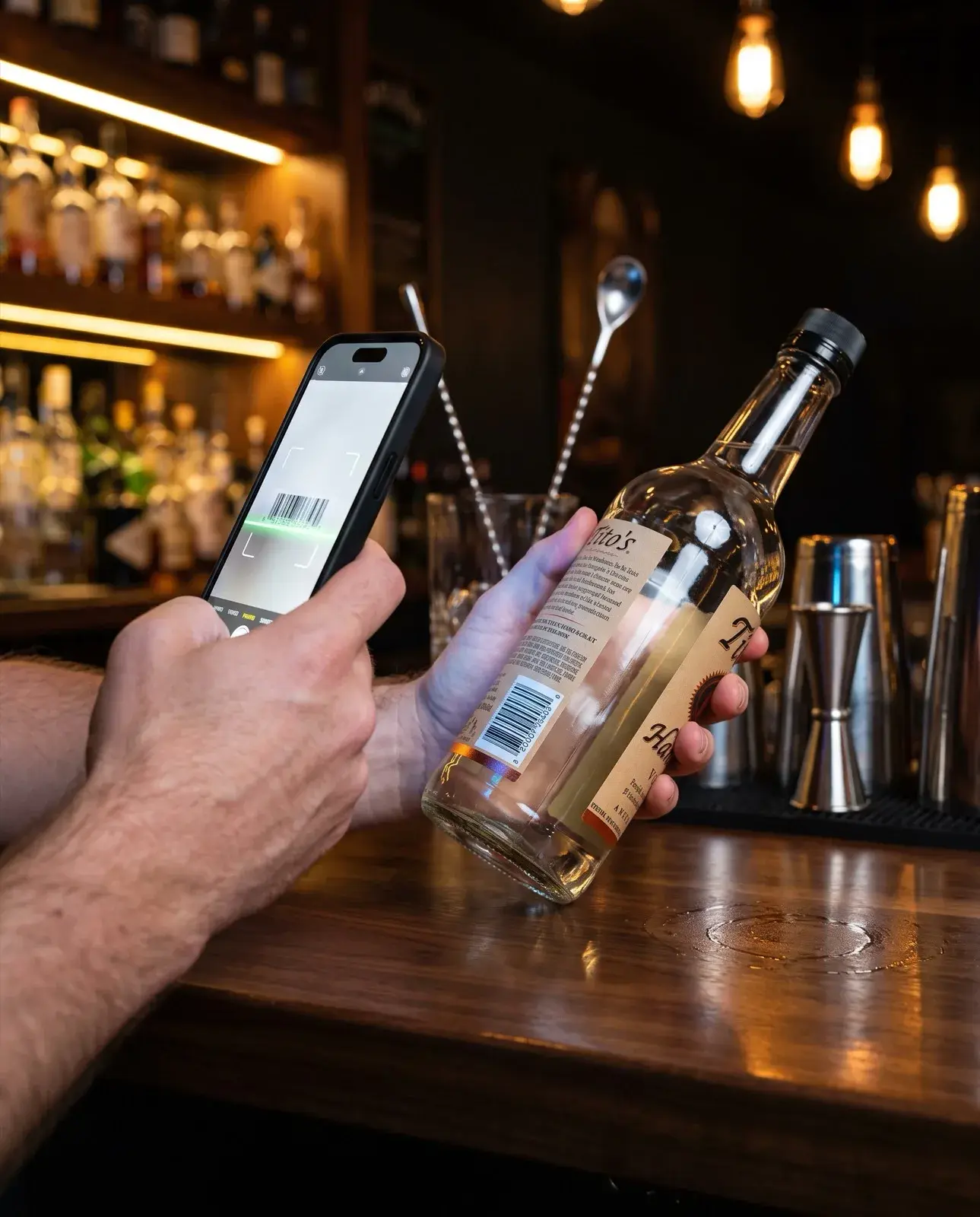
The right count cadence is one your team can sustain and review. Higher-risk or faster-moving products may justify more frequent checks.
How often should a bar count inventory? The honest answer is: as often as you can without it becoming a burden you skip. The right cadence is the one you will actually keep, because a count you abandon mid-quarter teaches the team that inventory is optional theater.
Long gaps between counts make investigations harder because the period contains more sales, staff changes, transfers, and waste events. A missing bottle in a thirty-day window has too many possible nights and too many possible hands. Shorter intervals narrow the suspect window, but they also require more labor and can add measurement noise if people rush.
Think in tradeoffs, not commandments. More frequency improves detection speed and coaching relevance. Less frequency reduces labor and interruption to service setup. Your job is to pick the point where the decision value of the count still exceeds the minutes it costs, then write that rule down so it survives manager turnover.
Start with a full-room cadence your team can complete consistently. For many programs that means weekly; for others with simpler storage and lower volume, every other week may be sustainable. Some high-complexity outlets need more. Use your own measured count duration, not a vendor anecdote, to decide what 'sustainable' means in your building.
Then layer risk-based checks. High-value openers, high-theft SKUs, and products that repeatedly land outside tolerance may deserve mid-cycle spot counts. A rotating cycle can complement full-room inventory: review riskier products more often while keeping a regular complete count. Label partial scopes clearly so you do not compare a spot check to a full count as if they were the same dataset.
Category behavior should influence cadence. Well spirits and high-velocity pours create more opportunities for small errors to accumulate. Slow premium bottles may not need the same mid-week attention unless they have a history of unexplained loss. Beer kegs, wine-by-the-glass programs, and batch cocktails each have their own depletion patterns; force-fitting one rhythm to all of them is how teams burn out.
Receiving frequency is part of the design. If you take multiple liquor deliveries per week and your count ignores cutoff discipline, every variance period includes timing fog. Choose a cutoff time, record deliveries and transfers near that cutoff, and keep the same physical route through storage, bars, and coolers. Process quality often beats raw frequency.
Labor math should be explicit. If a full count takes three hours of paired labor and you move from monthly to weekly, you are buying twelve times the counting hours per year, hopefully in exchange for faster detection and less month-end archaeology. Track minutes per count for a few cycles. If the software or method does not reduce hand tallying, more cadence just means more clipboard pain.
ExactPour's barcode workflow is designed to reduce hand tallying and re-entry so a tighter cadence is more realistic. That still does not prescribe a universal schedule. Run a trial, measure count time in your own venue, and choose a cadence from that evidence. The broader selection criteria live in ExactPour's bar inventory software guide at bar inventory software.
Review capacity matters as much as count capacity. A weekly count nobody reconciles is worse than a biweekly count with disciplined exception review. Build the meeting or async review into the cadence: who looks at flags, who assigns reason codes, and how soon coaching happens after a bad cycle.
Event-driven businesses need flexible rules. Stadiums, nightclubs, and banquet-heavy hotels may count around events rather than only around calendar weeks. Document the exception: what gets counted after a festival weekend, what waits until the next full cycle, and how transfers from shared storage are recorded.
Multi-location groups should allow outlet-specific cadences within a shared policy framework. A quiet lobby bar and a flagship nightclub are not the same risk surface. Corporate reporting can still align on week boundaries even if one outlet adds Wednesday spot checks on top-shelf openers.
Common failure modes: announcing daily counts that collapse after two weeks; counting without a route map so people miss the same cooler every time; changing units mid-year; and skipping counts during the busiest, and often leakiest, weeks of the year. Cadence only works if it survives peak season.
A sensible rollout: measure current count time; pick an initial interval the team can keep for six consecutive cycles; reconcile exceptions every cycle; then tighten frequency or expand spot checks only where unexplained, high-dollar variance persists. Loosen frequency only when the signal stays clean and labor is clearly better spent elsewhere.
Software should make the schedule visible: due counts, missed counts, scope, and who closed the session. Visibility turns 'we forgot' into a managed exception instead of a silent hole in the year. Pair that with POS reconciliation so each count feeds variance, not just a static on-hand number.
There is no universally correct answer printed on a bar napkin. There is only a cadence your people can execute, your managers can review, and your variance process can learn from. Choose that cadence on purpose, write it down, and revisit it when the menu, volume, or staffing model changes, not when someone shares an unverified industry benchmark in a group chat.
Cutoff discipline is worth repeating because it is the silent killer of cadence experiments. If the team counts while a delivery is being put away, or while a bartender is pulling a private-event order, the physical truth moves under their feet. Pause activity, or record it with timestamps that the reconciliation can respect. Frequency without cutoffs just produces faster nonsense.
Pair counting with a lightweight pre-count checklist: scanners charged or devices ready, route map printed or pinned, known empties pulled, transfers closed, and who owns review afterward. Five minutes of setup prevents the twenty-minute scavenger hunt that makes people hate weekly counts. Software reminders help; a laminated route on the cooler door helps more than operators admit.
New menu seasons are natural times to revisit cadence. When twenty new cocktails land, recipe risk spikes even if theft risk does not. Consider a temporary denser schedule for affected categories until the new items stabilize. Then return to the sustainable baseline so peak-season labor is spent on guests, not permanent inventory theater.
Franchise or multi-brand groups should separate corporate minimums from local maximum effort. A brand standard might require a weekly full count; a high-performing GM might add Wednesday opener checks without rewriting the brand Bible. Document both layers so audits know what was required versus what was heroic. ExactPour can support either layer; policy still has to say which is mandatory.
Re-evaluate cadence quarterly with three numbers: count minutes, unexplained variance dollars on the watched set, and percent of scheduled counts completed. If completion falls, simplify before you add tools. If variance stays loud on a few SKUs, tighten those SKUs before you tighten the whole room. That is how cadence stays a living control system instead of a forgotten SOP paragraph next to an inventory software ambition that never hits the floor. Keep bar inventory software handy when tooling is part of the fix.
Fix the awkward edge cases in writing: what happens when a count day falls on a holiday, a health inspection, or a double private-event load-in? Pre-approve the slip rule, count the day before, the day after, or a reduced scope, so people are not improvising under pressure. Improvised cadence is how 'weekly' becomes 'whenever.'
Celebrate completion streaks the way you celebrate sales goals. A wall or channel note for six on-time counts in a row sounds small; it signals that inventory is part of professionalism, not punishment. Pair praise with the review habit so you are not celebrating empty checkbox theater.
If you outgrow a cadence, change it deliberately in the SOP with a date and owner. Do not let informal practice drift away from the written rule, or new hires will learn the fiction. ExactPour can show missed sessions; leadership still has to decide whether the rule or the behavior needs to move. Use bar inventory software when you revisit tooling that makes a tighter rule realistic.
One more practical test: can a trained closer finish the scheduled count without calling the GM? If every cycle still needs a hero, the cadence is too ambitious for current tooling, staffing, or route design. Fix the friction, better method, clearer map, fewer SKUs in scope, before you add another day of the week to a process that already needs rescuing.
Think of cadence as a contract between labor and learning speed. You are buying earlier detection with minutes of human attention. When the contract is clear, this day, this route, this review, inventory stops feeling like a surprise homework assignment and starts feeling like closing the till: non-negotiable, finite, and finished before the next service problem arrives. ExactPour is there to make the minutes shorter; the contract is still yours to write and keep.
When ownership asks why you are not counting every day, answer with the completion metric and the review metric, not with industry folklore. Daily counts that are half-finished teach the organization that inventory is optional. A sustainable weekly cycle with full completion and same-week exception review usually beats an aspirational daily ritual that collapses under weekend volume. ExactPour can make denser schedules more realistic by cutting tally time, but realism still starts with what your roster can finish.
Questions this guide answers
- How often should a bar count inventory?
- Weekly for the liquor well in most casual bars, pubs, and sports bars. Monthly full-room counts are usually a reconstruction. Daily full-room counts burn the team.
- Should sports bars count after every game?
- Count after the week that includes the game, or add a well-only session after a playoff night. Do not skip the week because it was busy. See /industries/sports-bars.
- Is stocktaking the same as a count cadence?
- Stocktaking is the ritual. Cadence is how often you run it. /bar-stocktaking covers the ritual. This page covers the calendar.
Put it into practice
See this on your bar
Run ExactPour for two weeks and turn this guide into real numbers in your own operation. Book a walkthrough if you want a live tour first.